
Gajraj, an elderly Indian elephant, spent nearly 58 years in chains at the Yami Devi Hindu temple in Maharashtra, India.
His name, which means “king” or “big boy,” reflects the reverence held for him by locals, yet his life was marked by suffering. Captured as a calf from the wild, Gajraj endured years of abuse, neglect, and captivity.
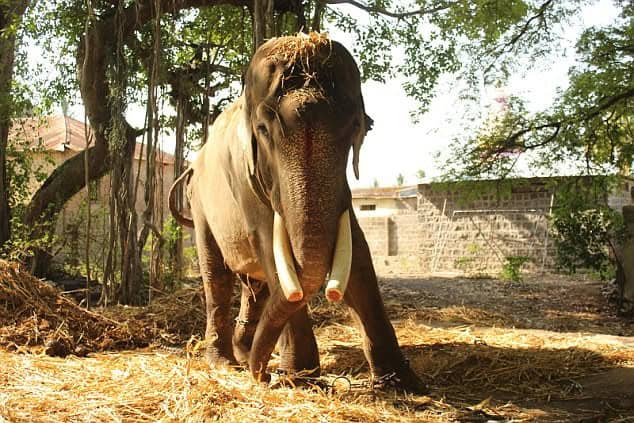
His tusks were removed, and he was left partially blind with painful foot abscesses, weak from years of poor food and limited movement. At his rescue, he was believed to be between 70 and 75 years old.
Thanks to efforts from Wildlife SOS, with funding support from PETA, Gajraj was finally freed. His rescue, however, was not without resistance.
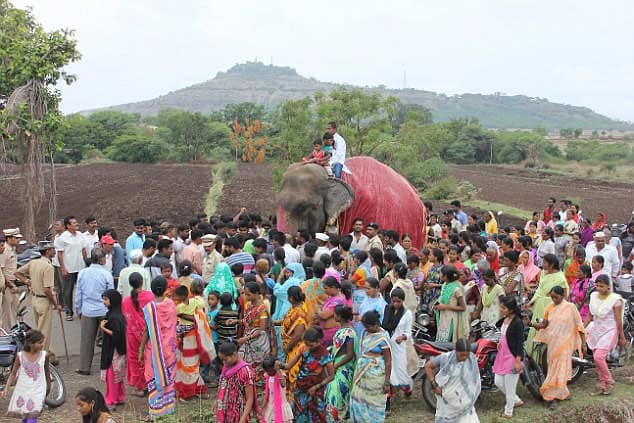
The team, which included veterinarians and handlers, required police protection as they faced a hostile crowd of about 500 villagers.
While some initially gathered to say goodbye, tensions escalated, and the rescuers were attacked with rocks and stones. The reason behind this opposition? Gajraj had become an icon in the village.
Kartick Satyanarayan of Wildlife SOS explained, “The loud, unruly mob aggravated the elephant.” Despite the challenges, the team managed to transport Gajraj to a sanctuary after nearly 930 miles of travel.
The plight of captive elephants in India is widespread. There are approximately 5,000 captive elephants in the country, with 600 of them held in temples like Gajraj.
In Kerala alone, the Guruvayur Temple is home to dozens of “star” elephants, earning substantial revenue for their participation in temple events.
Many of these elephants remain chained in place for decades, only released to participate in festivals, where they endure further abuse.
While public awareness of the issue has grown, little change has been seen. Despite global attention and promises of support from political figures, the suffering of these elephants continues.
Filmmaker Sangita Iyer, who produced the documentary Gods in Shackles to highlight the issue, has faced threats for her work.
“As a Hindu, I’m ashamed. We need to speak out and intervene,” she said. Iyer’s documentary captured the heartbreaking stories of elephants like Lakshmi, a 53-year-old female whose mahout blinded her after she took his food.
The problem extends beyond temple elephants. Across Southeast Asia, elephants are used to carry tourists, often suffering from severe physical and psychological distress.
In one tragic incident, an elephant named Golf killed a Scottish tourist in Thailand and was tortured afterwards.
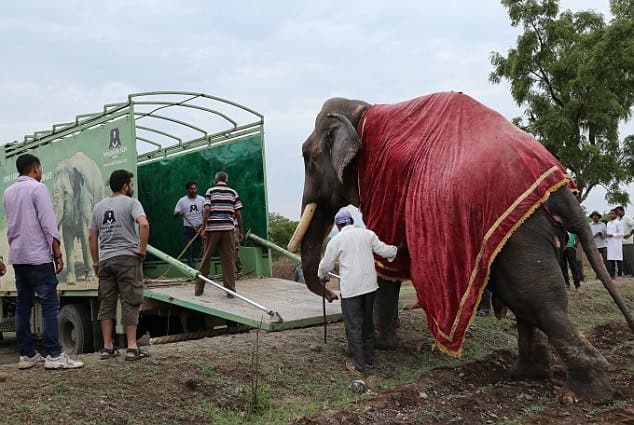
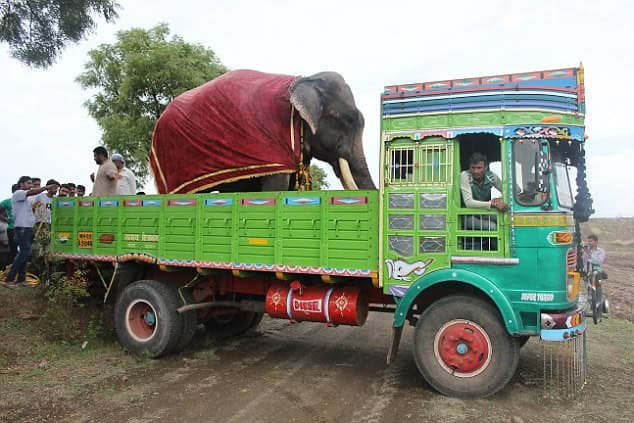
Gajraj’s journey to freedom was difficult. The sound of the crowd during his rescue terrified him, and he initially refused to board the ambulance specially adapted for his transport. However, he eventually calmed down and made his way to an open truck.
On the long journey to the Wildlife SOS sanctuary in Mathura, Gajraj was fed sugar cane and watermelon, and his wounds were treated. Upon arrival, his chains were removed for the first time in decades.
Gajraj is now receiving geriatric care at the sanctuary, where he will spend the rest of his days in peace.
His story is a powerful reminder of the need for greater protection and awareness for captive elephants in India.
As Mahatma Gandhi once said, “The greatness of a nation and its moral progress can be judged by the way its animals are treated.”
Read more Elephant News.


