
Field researchers have expressed concern after observing a young male elephant with a noticeable limp in its right hind leg.
The sight prompted them to quickly seek an evaluation of the elephant’s condition to identify the cause and provide necessary treatment.
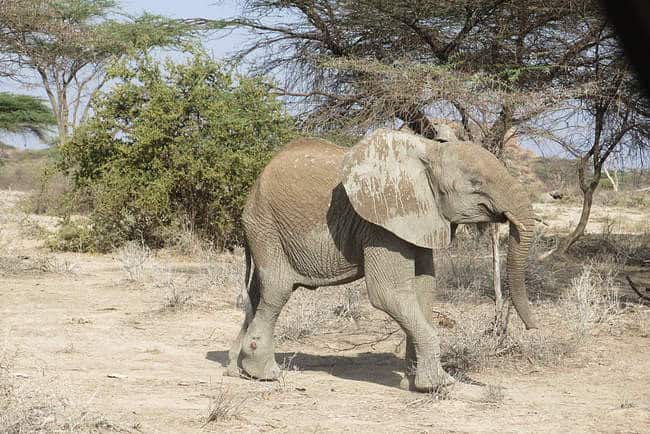
The elephant was found near the Ewaso Nyiro River, moving cautiously through acacia trees while browsing.
Though its demeanor appeared calm and built strong, a closer inspection revealed a troubling issue: significant swelling around the hock joint of its right hind leg.

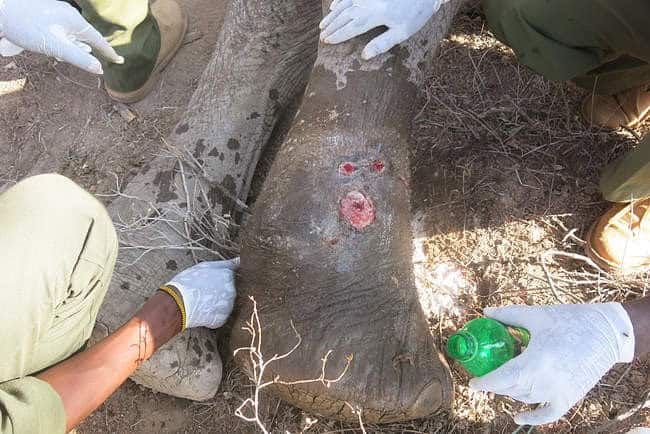
Upon further examination, researchers discovered wounds in the swollen area, and the elephant was reluctant to place weight on the affected leg.
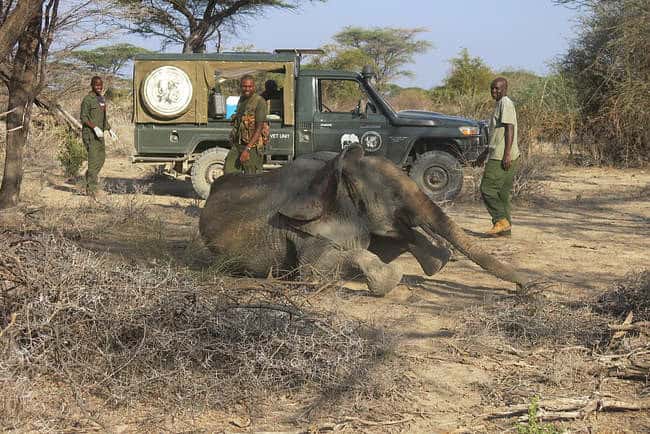
The team decided to sedate the elephant to assess the situation thoroughly and administer treatment.
At 4:09 PM, the animal was darted with 3 mg of Etorphine hydrochloride, leading to it lying on its side by 4:16 PM. During the physical examination, a fracture in the tarsal bones was confirmed.

Although the bones had healed, they had done so improperly, resulting in calloused tissue and bone malformation.
The treatment involved cleaning and disinfecting the wounds, followed by debridement. The team applied povidone iodine to disinfect the area further and then administered antibiotics and anti-inflammatory drugs through intramuscular injections to prevent infection and reduce swelling.
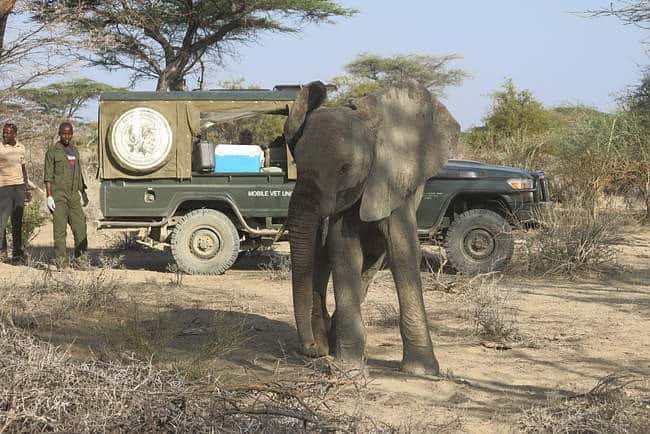
Despite the leg deformity, the elephant displayed no signs of pain, and the injuries had fully healed. By 4:37 PM, the procedure was completed, and the elephant was brought back to its feet with the help of Naltrexone hydrochloride.
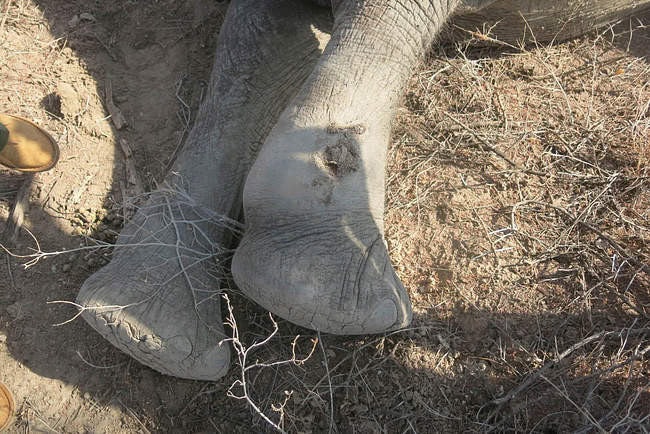
Although the elephant’s leg may retain some deformity, the successful treatment indicates that it can continue living without significant discomfort.
This case underscores the importance of wildlife conservation efforts, which play a vital role in ensuring the health and well-being of individual animals in their natural habitats.
Read more Elephant News.


