
A baby elephant, once on the brink of death due to ivory poachers, is now walking again thanks to a specially designed boot and dedicated care.
Seventeen-month-old Suni was found in Zambia with severe injuries from an axe attack, but her remarkable recovery has become a symbol of hope and inspiration.

The rise in elephant poaching across Africa, driven largely by the demand for ivory in China, has led to a dire situation for the continent’s elephants. Suni, an orphaned calf, was one of the many victims.
Dehydrated, weak, and struggling to move using only her front legs, Suni was discovered after her mother was killed for her tusks. Her injuries included a spinal wound that left her right leg paralyzed.

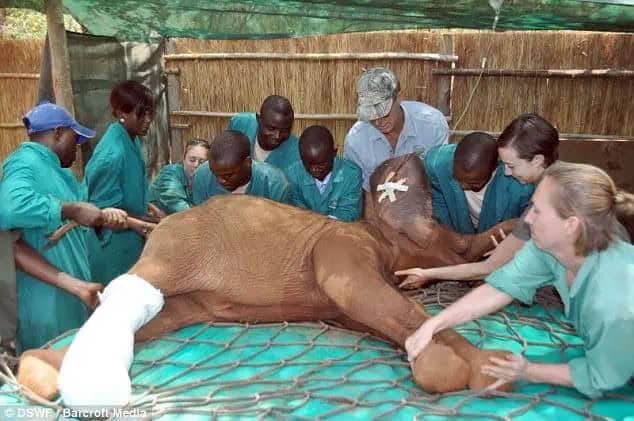
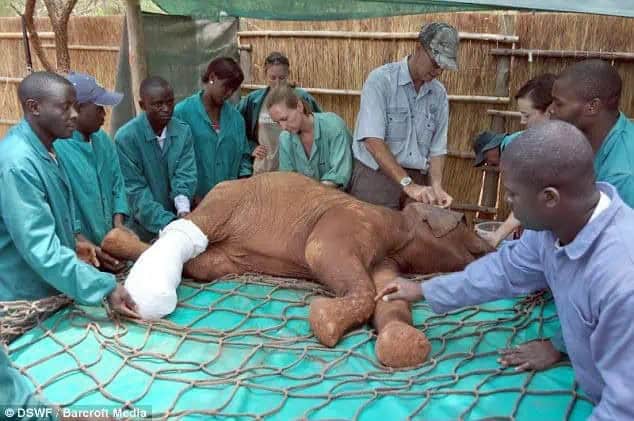
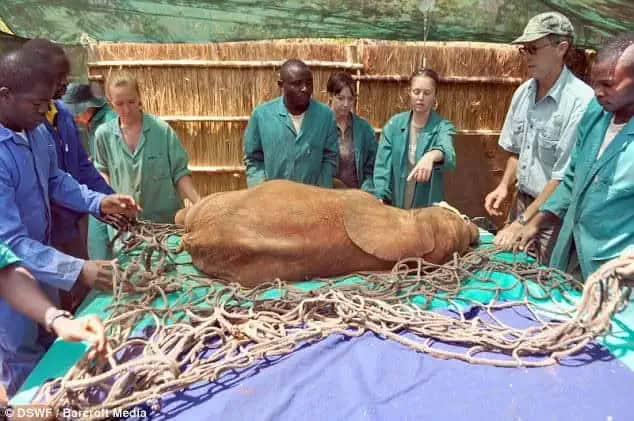
Fortunately, the Elephant Orphanage Project near Lusaka, Zambia, quickly intervened. Specialists from Norway and the United States performed surgery on Suni and fitted her with an aluminum leg brace, which helped her regain balance.
Rachel Murton, the manager of the Elephant Orphanage, recalled the early challenges: “It was touch and go at first, but as the swelling in her back went down, she began to feel her leg again.”
Suni’s condition has steadily improved through a combination of physiotherapy, massage, and continuous nursing.
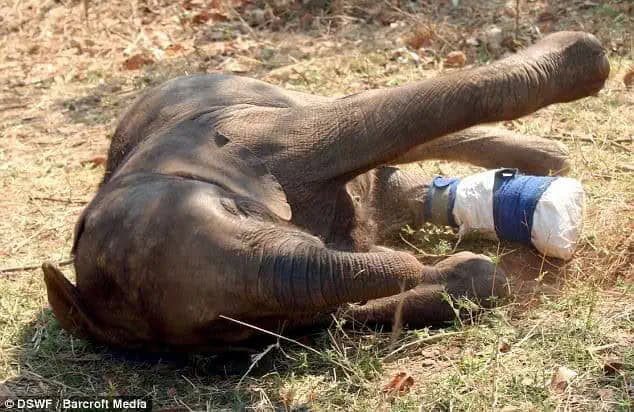
Suni’s newfound mobility has allowed her to play with other orphaned elephants at the sanctuary. However, she still requires ongoing medical care and must be fed every three hours.
Her custom leg support, made from aluminum, PVC, and leather, was designed to meet her unique needs. Kelvin Chanda, the headkeeper at the orphanage, shared his joy at Suni’s progress: “The first time Suni walked on her own was indescribable.”
Suni’s story underscores the devastating impact of the ivory trade on Africa’s elephant population. Despite a global ban on ivory sales established in 1989, poaching continues to rise, fueled by growing demand for ivory, particularly in China.

Legal loopholes allowed large-scale ivory sales in the late 1990s and early 2000s, further exacerbating the problem.
By 2011, global ivory seizures had reached record levels, indicating that the threat to elephants remains critical.
Cynthia Moss, from the Amboseli Elephant Research Project in Kenya, expressed deep concern: “It’s heartbreaking to be fighting for the survival of elephants once again. The 1989 ban allowed populations to recover, but now, even in Amboseli, we’re losing elephants to poaching for the first time in years. Ivory, whether legal or illegal, only serves the elephants who grow it.”
Read more Elephant News.


