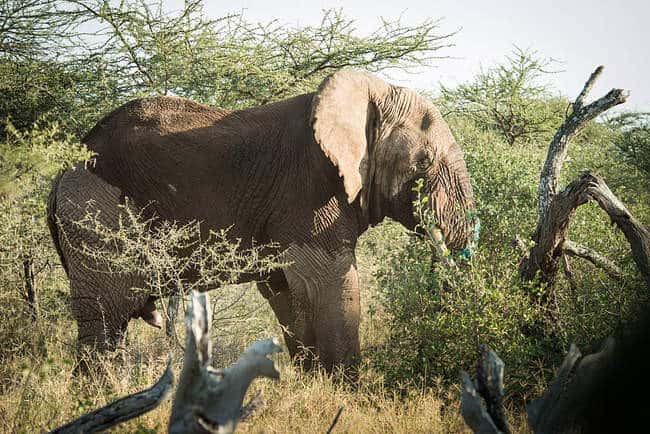
In a swift response to alarming reports on June 30, a significant bull elephant was discovered on the Mbirikani group ranch, bearing three spear wounds near the base of his trunk and two more on his hind area.
The Kenya Wildlife Service (KWS) joined forces with Dr. Poghon, leading the SWT/KWS Tsavo Mobile Veterinary Unit, to address the critical situation promptly.
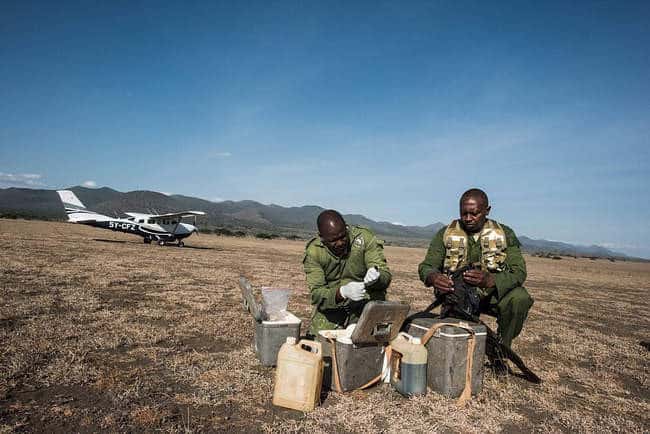
The veterinary team, accompanied by SWT pilot Taru Carr-Hartley, rapidly flew to the western side of the Chyulu Hills.
The helicopter, piloted by Andy Payne, awaited their arrival alongside vigilant Big Life Rangers who had been monitoring the elephant until help could arrive.
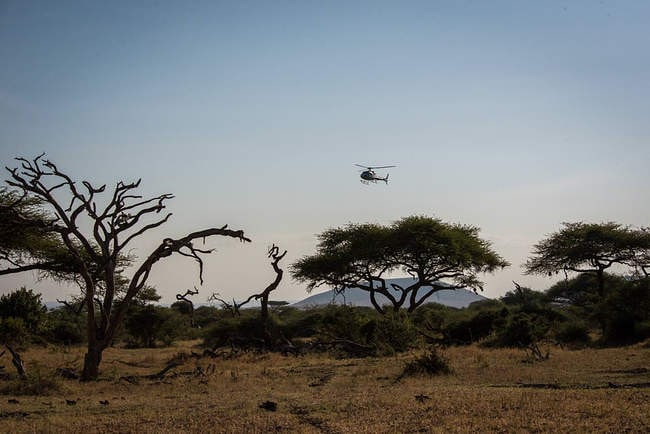
Dr. Poghon, armed with a tranquilizer dart and veterinary gear, chose to dart the elephant from the helicopter.
Hovering above, the helicopter ensured the elephant remained in an open area for easy ground access once immobilized.
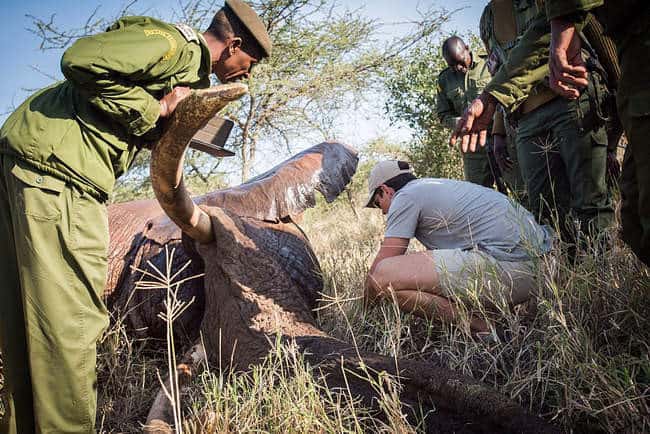
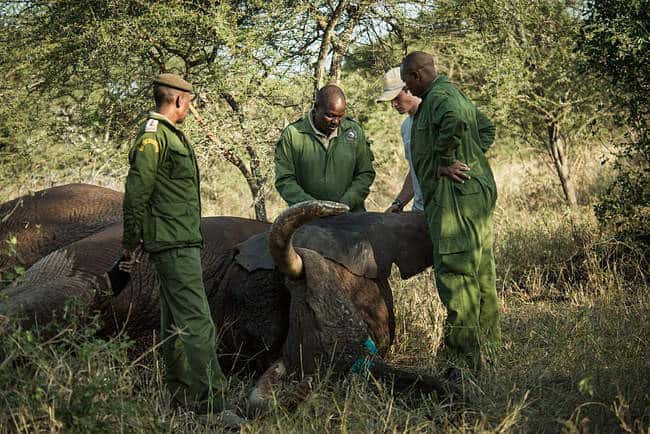
As the tranquilizer took effect and the bull safely slumbered, the team sprang to attend to his injuries.
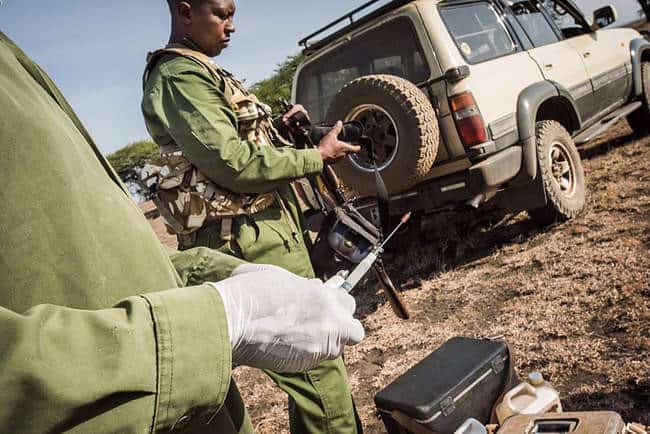
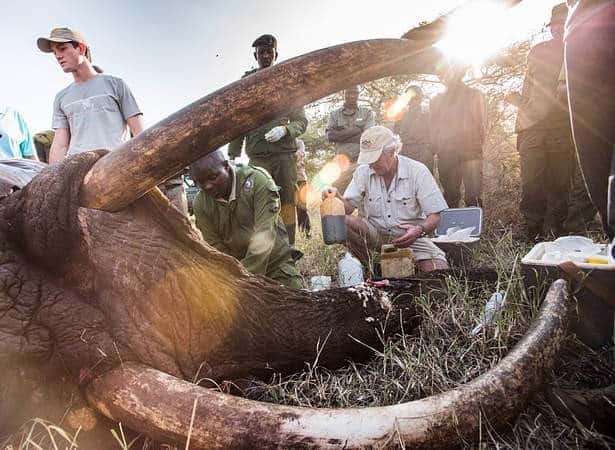
Faced with maggot-infested wounds, the team meticulously cleaned each wound, relieving the suffering elephant.
Green clay was applied to prevent further infection, accompanied by anti-inflammatory and antibiotic medications.
The entire operation, executed with precision, lasted approximately 30 minutes.
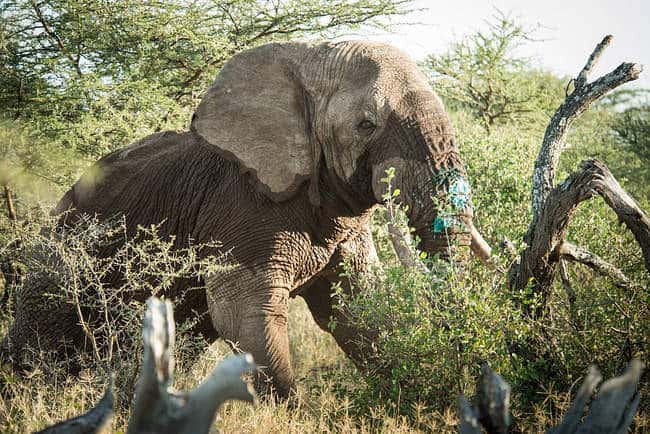
As the sun dipped below the horizon, the revival drug was administered, and the team watched from a safe distance as the majestic creature stirred and regained consciousness.
With the vet’s favorable prognosis for a full recovery, the rapid intervention brought comfort, ensuring the bull elephant would experience increased comfort after thoroughly treating his injuries.
The dedication of the veterinary team, pilots, and rangers underscores the collaborative efforts to protect and heal the majestic wildlife gracing the landscapes of Kenya’s vast wilderness.
Read more Elephant News.


