
Fireworks are designed to surprise us with light and sound. For many animals, however, the sudden explosions are not entertainment. They can trigger fear, frantic escape attempts and dangerous disruption.
That does not mean every celebration must disappear. It does invite a reasonable question: what if people redirected even part of their fireworks budget to an animal shelter or wildlife rescue, while choosing quieter ways to mark the occasion?
What fireworks can do to pets
Veterinary organizations recognize fear responses to fireworks as a common welfare problem in dogs and cats. Some animals hide, tremble, pant, pace or refuse food. Others may try to force their way through doors, windows or fences in an attempt to escape an unfamiliar threat.
The American Veterinary Medical Association advises owners to keep pets in a secure, escape-proof room or crate during fireworks and celebrations. Identification tags and microchip information should be current in case an animal gets loose.
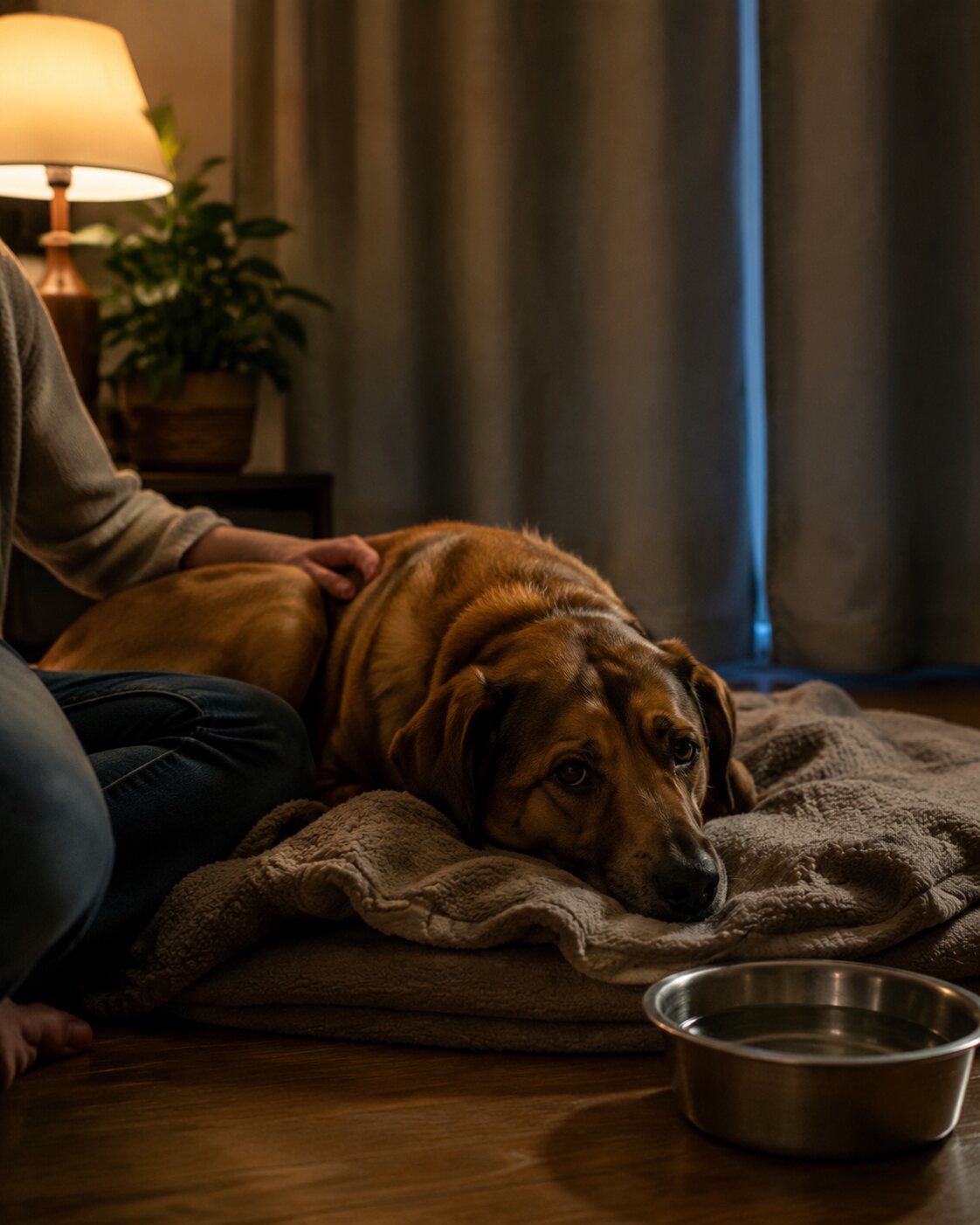
For animals with severe noise fear, preparation should begin before the display. The British Veterinary Association recommends speaking with a veterinarian about appropriate treatment and gradual desensitization rather than waiting until an animal is already panicking. Medication or other therapies should be used only under professional guidance.
Owners can also close curtains, use familiar background sound, provide a hiding place and keep normal routines as much as possible. Punishing a frightened animal is never appropriate; fear is not disobedience.
Wildlife cannot be brought into a safe room
The effects do not stop at the walls of our homes. Wildlife has no owner available to close the curtains or check a microchip.
Radar research published in 2011 documented large numbers of birds taking flight immediately after midnight fireworks, reaching far greater heights than during normal nighttime movement. Research on wild greylag geese has also found measurable physiological stress around firework events, including sharply elevated heart rates.
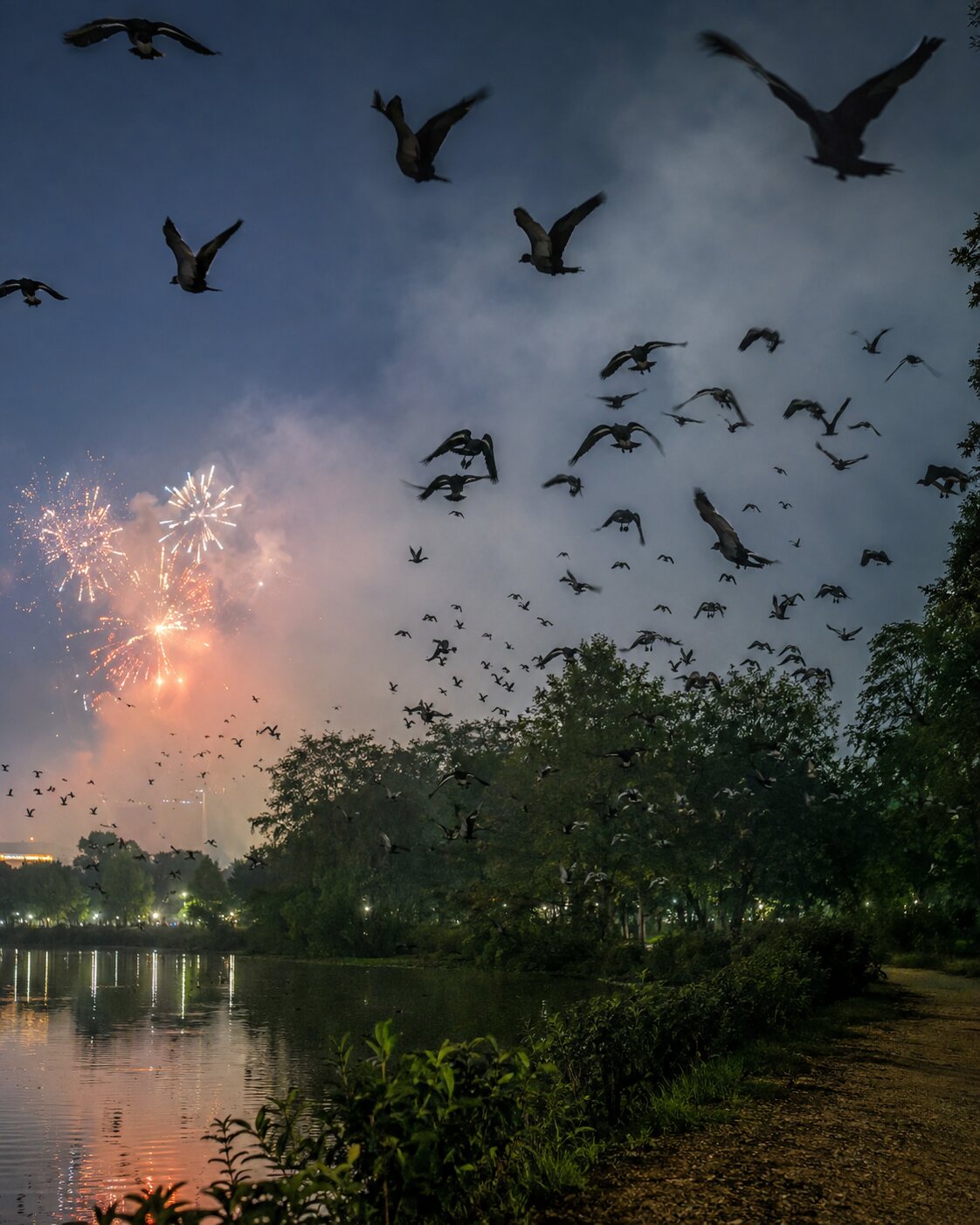
The exact impact varies by species, distance, intensity, timing and repetition. It would be inaccurate to claim that every display kills wildlife. But disturbance can make animals waste energy, abandon resting places, collide with obstacles or move toward roads and other hazards.
People who do use fireworks can reduce some risk by avoiding nesting and roosting areas, lakes, trees and other known habitat. Debris should be collected only after it has cooled and disposed of safely. Community displays can also be easier to plan and manage than many separate private displays.
A celebration can leave something useful behind
The idea of donating instead of buying fireworks is a proposal, not a scientific finding. Its value lies in the contrast between a few minutes of noise and support that can continue helping after the night is over.
A local shelter may use donations for food, veterinary treatment, bedding, enrichment or foster support. Wildlife rehabilitation organizations may need funds for specialized diets, medical supplies and safe enclosures. Before donating, people should check an organization’s official website or contact it directly to learn what is most needed.
There are other lower-noise ways to celebrate: community light displays, projected art, music, shared meals or a donation drive. None offers a perfect solution in every location, but choosing with animals in mind is a meaningful start.
If fireworks are part of an event, preparation and restraint can reduce harm. If they are optional, redirecting some of that spending can turn a brief celebration into food, treatment or shelter for an animal that needs it.
The question is not whether people deserve moments of joy. It is whether our joy must arrive as fear for the animals around us—and whether some of the money used to create noise could instead create safety.
Sources
- American Veterinary Medical Association: July 4 pet safety
- British Veterinary Association: preparing pets for fireworks
- RSPCA: horses, livestock, wildlife and fireworks
- Behavioral Ecology: birds flee en masse from New Year’s Eve fireworks
- Anglia Ruskin University: physiological stress in wild birds
