
A claim circulating online says Hawaii “just” strengthened its dogfighting law. The underlying reform is real, but the timing matters: then-Gov. Neil Abercrombie signed the measure in 2011, not 2026. The legislation, enacted as Act 149, strengthened penalties for dogfighting and expanded the conduct covered by state law.
The change was designed to reach more than the person physically placing two dogs in a pit. It addressed the organizers, trainers, property owners, spectators and gamblers whose participation can sustain an illegal fighting operation.

Act 149 strengthened two levels of dogfighting offenses
Under Hawaii Revised Statutes §711-1109.3, first-degree dogfighting includes knowingly causing, sponsoring, arranging or holding a dogfight. It also covers owning, training, transporting, possessing, selling, transferring or equipping a dog when the person intends for the animal to be used in a fight.
The statute further reaches a person who recklessly allows a dogfight on property under that person’s ownership or control, or who recklessly permits a dog intended for fighting to be kept, trained or transported there. A violation is a Class B felony.
Act 149 also created a second-degree offense, now codified at §711-1109.35. It covers knowingly wagering on a dogfight, attending or paying admission to one, and possessing a device intended to enhance a dog’s fighting ability when the person intends to use it to train or prepare a dog for fighting. Those acts are a Class C felony.
The law targeted the network around the fights
The distinction between the two offenses is important. Organizing, training and supplying dogs for fights are treated more severely than attendance and other supporting conduct, but both levels are felonies. That structure recognizes a practical reality: organized animal fighting depends on an audience, money, equipment, locations and people willing to help conceal or maintain the operation.
Contemporary reporting on the 2011 signing explained that lawmakers wanted to close gaps that had made it difficult to prosecute people who supported dogfighting without being caught actively staging a fight. The act’s legislative findings also referred to the use of “bait” animals and the broader cruelty associated with training and fighting dogs.
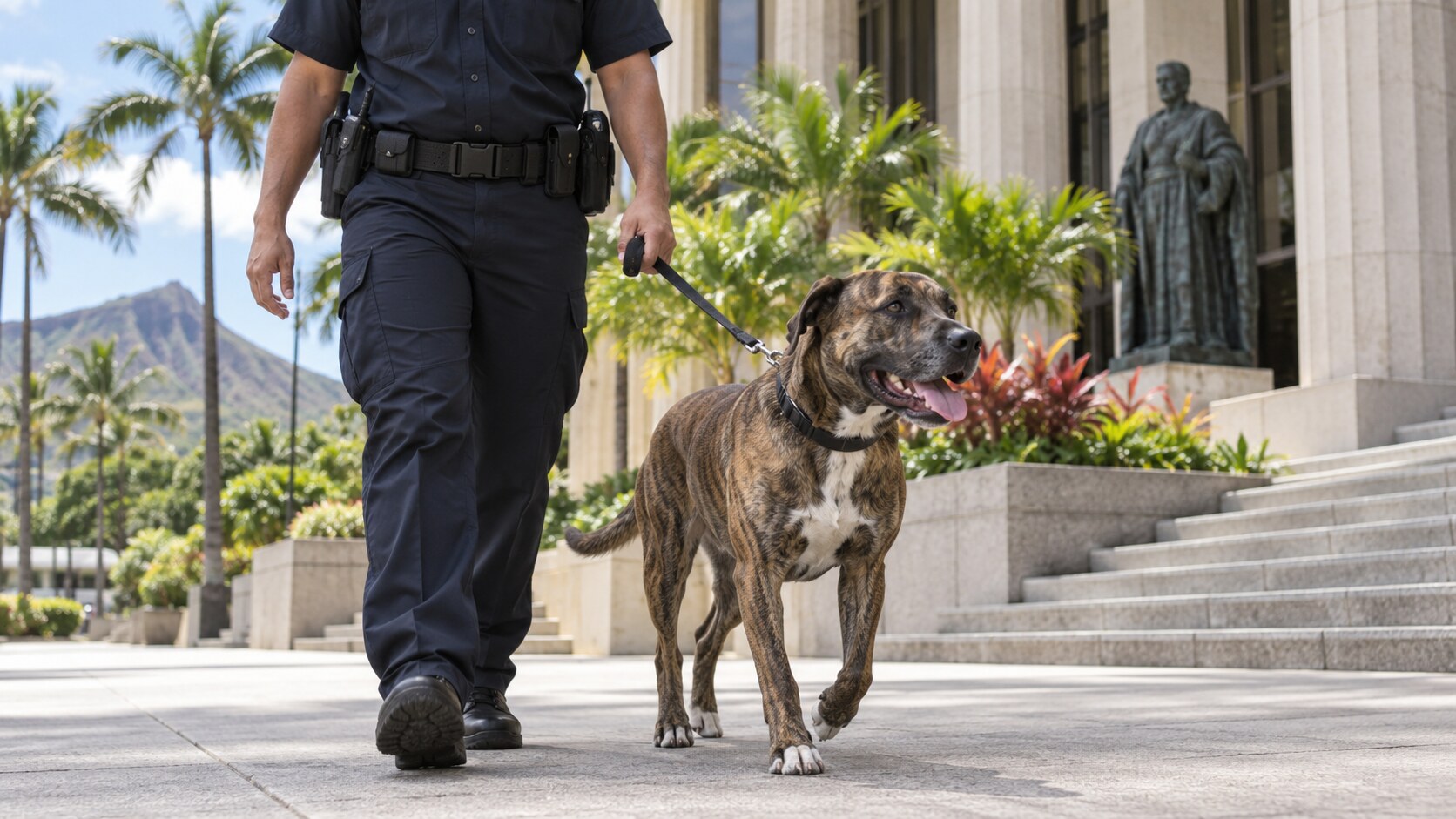
Hawaii law also provides a process for impounding animals involved in alleged dogfighting violations. Section 711-1110 addresses seizure, care and possible forfeiture. These provisions matter because dogs removed from fighting environments may require secure housing, veterinary evaluation and long-term behavioral support while a criminal case proceeds.
Stronger penalties are only part of prevention
Felony penalties give investigators and prosecutors stronger tools, but laws work best alongside public reporting, trained animal-control teams and resources for the animals who survive. People should not attempt to enter a suspected fighting site or confront participants. Instead, concerns should be reported to local law enforcement or animal-control authorities with whatever safe, lawful details are available.
Dogs exploited in fighting are victims. Their behavior and recovery needs vary, and decisions about treatment or placement should be made through individual veterinary and behavioral assessments—not stereotypes about breed or appearance.
The verified takeaway is therefore narrower, but still significant: Hawaii did strengthen its dogfighting framework under Gov. Abercrombie. It happened through Act 149 in 2011, with core dogfighting conduct classified as a Class B felony and wagering, attendance and specified fighting-related equipment covered as a Class C felony.
Sources
- Hawaii Revised Statutes §711-1109.3
- Hawaii Revised Statutes §711-1109.35
- Hawaii Revised Statutes §711-1110
- Hawaii News Now: Hawaii’s dog fighting law strengthened (June 22, 2011)
