
When a flood, wildfire or hurricane forces people to leave quickly, an animal can determine whether a family evacuates at all. That is why emergency planning has increasingly moved beyond a simple instruction to “leave now” and toward plans that account for the animals people depend on and refuse to abandon.
In the United States, this is not only an advocacy proposal. The Pets Evacuation and Transportation Standards Act of 2006, commonly called the PETS Act, amended federal disaster law so that qualifying state and local emergency preparedness plans address the needs of people with household pets and service animals before, during and after a major disaster or emergency.
The law recognizes the human-animal bond
The law followed lessons from disasters in which people faced a devastating choice between evacuating and leaving animals behind. It also authorized federal support for animal emergency preparedness, including rescue, care, shelter and essential needs connected to household pets and service animals.
FEMA’s 2025 Federal Evacuation Support Annex says jurisdictions should plan for safe evacuation and sheltering of animals in the affected community. The agency notes that keeping people and animals together where possible can improve compliance with evacuation orders and reduce dangerous returns to evacuated areas.
That does not mean every public shelter must accept every kind of animal in the same room as people. Local plans may use co-located animal shelters, designated pet-friendly facilities, transport arrangements or other systems. Service animals also have separate access protections under disability law.
Household pets are not the whole picture
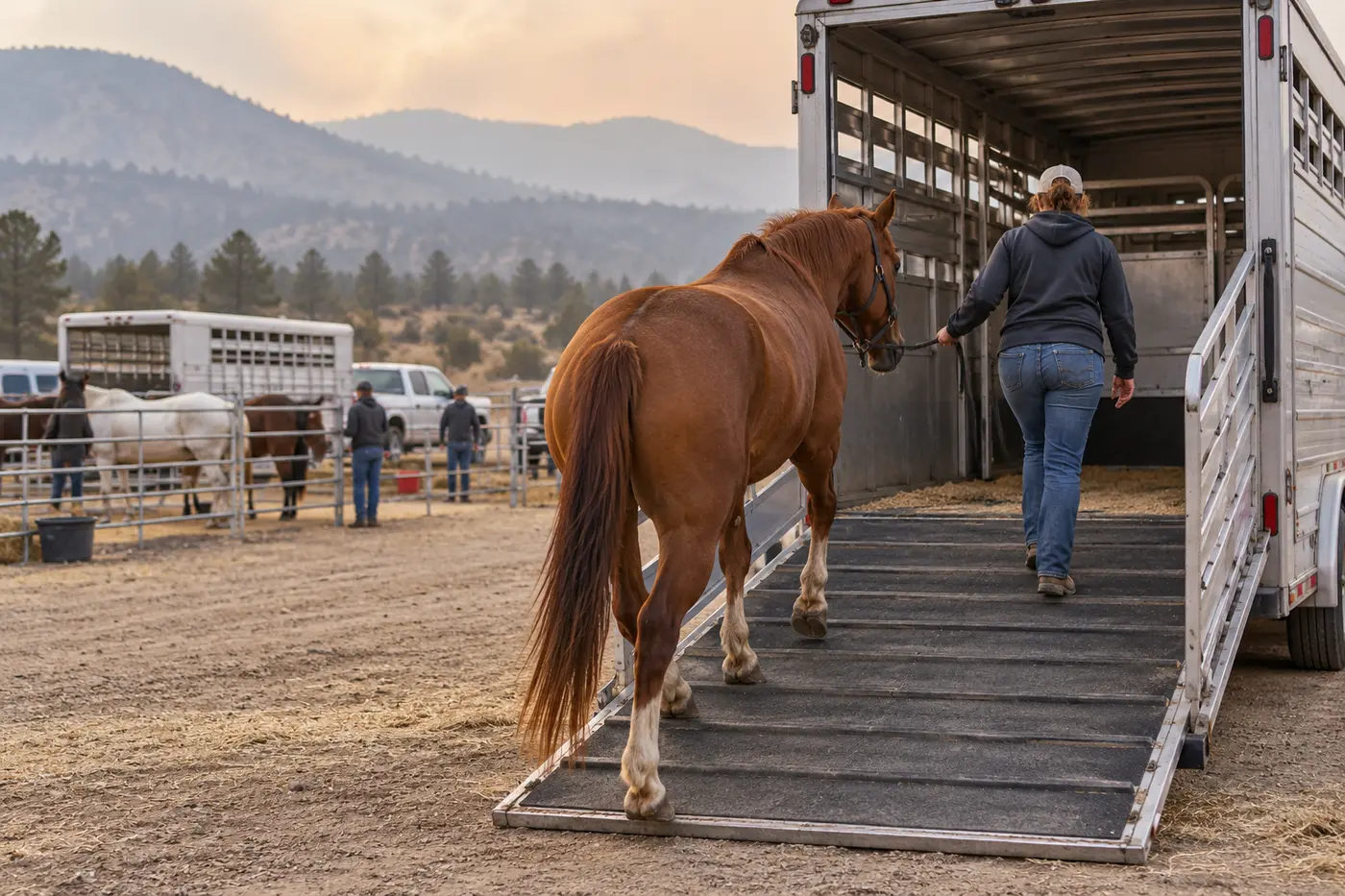
The PETS Act specifically centers people with household pets and service animals. Horses, livestock, exotic animals and wildlife can require different equipment, destinations and trained personnel. A horse trailer cannot be improvised after roads are blocked, and large-animal shelters need suitable space, fencing, feed and water.
FEMA’s current evacuation guidance takes a broader operational view, encouraging jurisdictions to plan for all types of animals. Still, owners and caretakers must understand the local system. A county may have a designated animal shelter, while another may rely on partnerships with fairgrounds, veterinarians, rescue groups or neighboring jurisdictions.
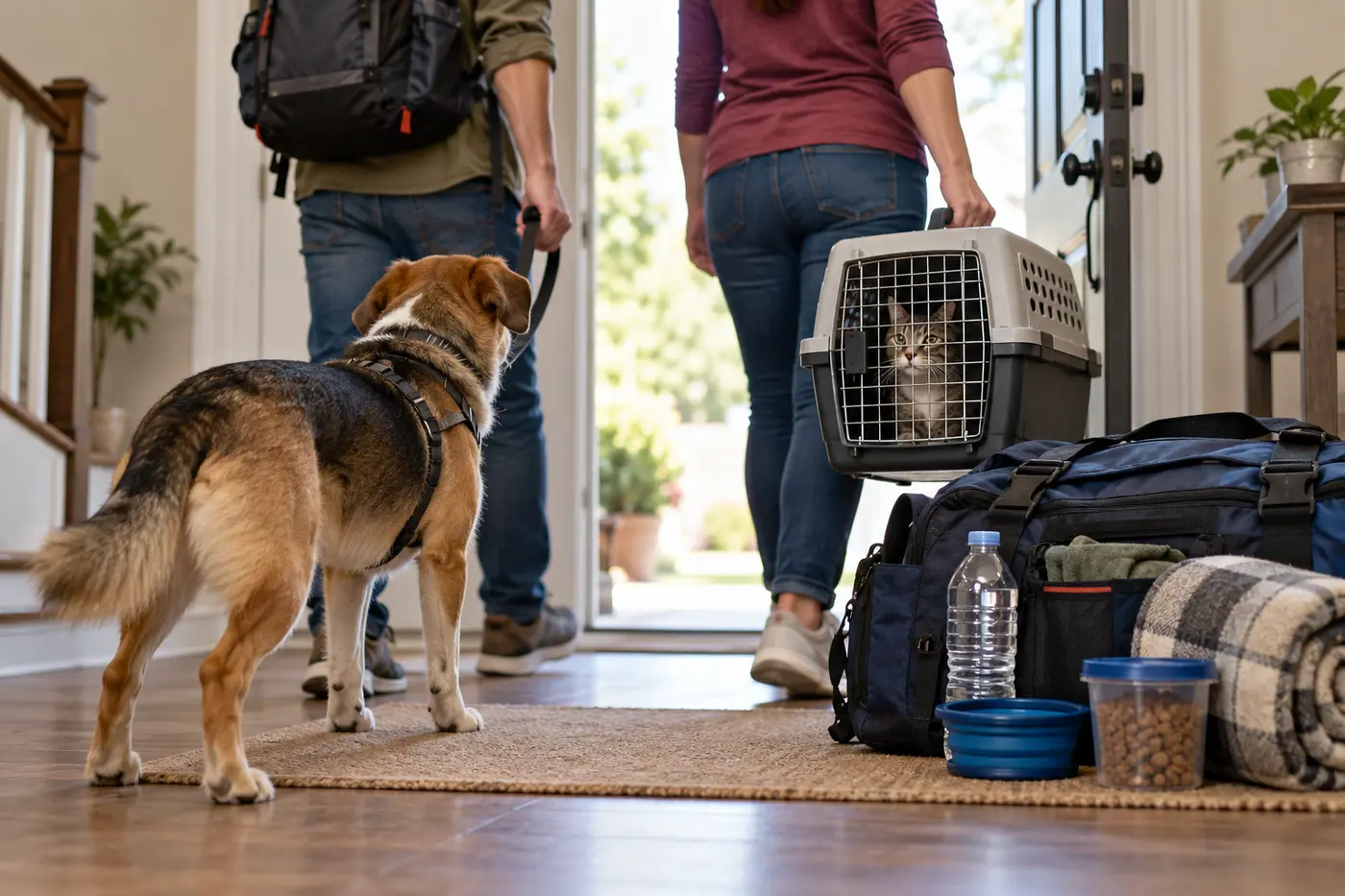
People should not assume that a hotel, public shelter or evacuation vehicle will accept a pet without advance confirmation. Capacity can change during a crisis, and animals may need a carrier, leash, vaccination record or other identification.
A plan begins before the warning
Ready.gov’s pet-disaster guidance recommends deciding in advance where animals can go, developing a buddy system and keeping vaccination records and microchip contact information current. It also recommends several days of food and water in an emergency kit.
A practical household plan should include a secure carrier or leash, medicines, identification, recent photos, food, water and sanitation supplies. Families should know more than one evacuation route and identify destinations that accept their animals. Someone nearby should be able to help if the owner is away when an order arrives.
For horses and livestock, preparation needs to begin earlier. Transport capacity, loading practice, destination agreements and animal identification can make the difference between an orderly evacuation and an impossible one.
Including animals in disaster plans protects more than animals. It reduces pressure on families, limits preventable risks for responders and makes evacuation instructions more realistic. The law provides a foundation, but the safest plan is the one a community has communicated and a household has already practiced.
Sources: PETS Act of 2006; FEMA Federal Evacuation Support Annex; Ready.gov pet preparedness guide; ADA.gov service-animal guidance.
